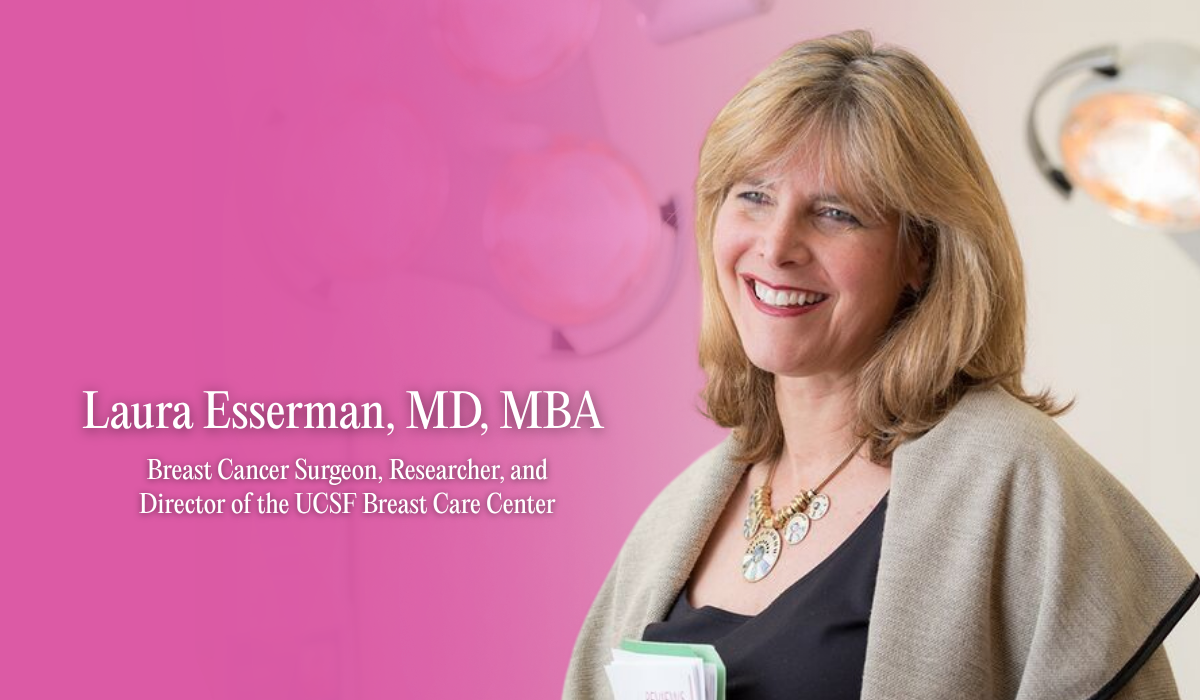
Breast Cancer Care Isn’t One-Size-Fits-All. Here’s Why That Could Matter for Your Life

For decades, breast cancer screening has largely followed a schedule based on age. Laura Esserman, MD, MBA, director of the UCSF Breast Care Center and co-leader of the WISDOM study, believes screening should instead reflect a woman’s individual risk, while treatment should be tailored to the biology of her cancer. We spoke with Dr. Esserman about what this more personalized approach could mean for women. The conversation has been edited and condensed for clarity.
In this article, you’ll learn...
- How risk-based screening could replace a one-size-fits-all mammogram schedule
- Why family history and a previous negative genetic test may not tell the whole story
- How screening decisions may change for women at different ages and levels of risk
- Which questions to ask after a diagnosis to avoid rushed or unnecessary treatment
What is risk-based screening, and what does it look like in practice?
We no longer treat breast cancer as though it is one disease, and we should no longer screen as though everyone has the same risk. The goal is to identify people at risk for aggressive cancers and find those cancers earlier, while reducing unnecessary screening and procedures for people at lower risk.
In the WISDOM study, we combined a clinical risk model, which considers factors such as breast density and family history, with testing for nine breast cancer susceptibility genes and a polygenic risk score, which accounts for many common genetic variants. Women were placed into four risk groups. Those at the highest risk were advised to alternate MRI and mammography every six months. Women with elevated risk were advised to have annual mammograms, while those at average risk were advised to have mammograms every two years. Women under 50 with low five-year risk could wait until age 50, or until their risk increased, to begin screening. The assessment was updated annually as risk factors changed.
Risk-based screening does not simply mean screening less. It means matching when, how often and with which method a woman is screened to her individual risk.
Why are genetics important even when someone does not have a family history of breast cancer?
Among the women in our study who had a pathogenic variant that put them at very high risk, 30 percent did not have a family history of breast cancer. Someone may come from a small family, may not know the family’s history or may have mostly men in the family. People with these variants may need to know in their 30s, because some cancers associated with them develop at younger ages and screening may need to start sooner.
Why might some women need more screening while others may safely need less?
If you are at risk for a faster-growing cancer, a mammogram every year may not be enough. The highest-risk group may need screening every six months with a contrast-based examination such as MRI or contrast-enhanced mammography. At the same time, screening has downsides. It can lead to frightening findings and biopsies that turn out not to be cancer, and it can find ductal carcinoma in situ that may never progress. The point is to match the screening to the risk.
What should women understand about a negative genetic test, especially if it was done years ago?
A negative result means the test did not find a harmful variant in the breast cancer genes it examined. If a specific variant is known to cause cancer in your family and you do not carry it, that is reassuring: You did not inherit that particular risk. But if no variant has been found to explain your family’s cancer history, a negative result does not erase the concern. Most women who develop breast cancer do not have a known pathogenic variant, and genetics is only one part of risk.
It also matters which test you had. Some older tests examined fewer genes, and direct-to-consumer tests may look for only selected variants. For example, 23andMe does not provide a comprehensive evaluation of the BRCA1 and BRCA2 genes. Testing continues to expand as researchers identify additional risk genes and develop tools such as polygenic risk scores.
If you have a strong or unusual personal or family history of cancer, ask your healthcare team every three to five years whether your previous results should be reviewed or updated.
How should women in their 70s, 80s and beyond decide whether to continue mammograms?
Age alone should not determine when you stop screening. The decision should reflect your breast cancer risk, overall health and other medical conditions. Screening may offer little benefit to someone facing another serious illness, while a healthy older woman at higher risk may make a different choice. WISDOM uses these factors to help determine when screening can safely stop. Women and their healthcare providers can also use decision tools available through ePrognosis, a UCSF-hosted resource co-developed by UCSF researchers and Mara Schonberg, MD, MPH, a Harvard Medical School professor who studies breast cancer screening and decision-making in older women.
Screening does not prevent breast cancer, and its effect on survival may not become apparent for about 10 years. Many breast cancers found in older women are slow-growing, and treatment may be the same whether a tumor is 1 centimeter or 2.5 centimeters. Even if you stop routine mammograms, remain aware of breast changes and report anything new to your physician.
How is breast cancer treatment becoming more personalized?
The best way to adjust treatment is to determine whether the first treatment is working. If it is not, move to the next option. If a cancer disappears with treatment, we know the outcome is excellent. On the other hand, every cancer is not a killer cancer. Some small, low-risk cancers can be overtreated. Women should ask: What kind of tumor do I have? Do I need chemotherapy, radiation, or lymph-node surgery? Could treatment begin before surgery so we can learn whether it is working? Are there clinical trials that may be appropriate for me?
What do you want women to remember after a diagnosis?
Cancer is not an emergency simply because you now know about it. That does not mean delaying care, but it often means you have time to learn what type of cancer you have, which treatments are most likely to help and whether a clinical trial may offer another option. Fear can make women want to act immediately. Some decide they want a bilateral mastectomy before they fully understand whether they need one. But more surgery is not always better, and in some cases, beginning with medication can show whether the tumor responds before surgery is considered. Take the time you and your care team need to understand your options rather than rushing into a decision solely because you are afraid.
What gives you the most hope about the next five years?
I think inherited genetic risk will become a much more routine part of care. If you are at high risk for breast cancer, heart disease, or colon cancer, you will know about it and be able to do something to reduce that risk. It gives people agency. We will also have opportunities to develop very specific risk-reducing medicines tailored to the diseases an individual is most at risk for.
Five ways to make breast cancer care more personal
Based on Dr. Esserman’s guidance, these questions can help you start a more individualized conversation with your healthcare team.
- What is my individual breast cancer risk? Ask how your family history, breast density, previous biopsies, genetics and other factors affect your screening plan.
- Could genetic testing help clarify my risk? Family history alone does not identify everyone with a high-risk variant.
- Does my screening schedule match my risk? Some women may need more intensive imaging, while others may safely be screened less often.
- What should I do if I notice a breast change? Report a lump or another persistent change even if your most recent mammogram was normal.
- How should the biology of my cancer guide treatment? Ask which treatments are likely to help, which might be safely avoided and whether treatment before surgery or a clinical trial should be considered.
About the Expert
Laura Esserman, MD, MBA, is a breast cancer surgeon, researcher and director of the UCSF Breast Care Center. She leads the WISDOM study, which is investigating whether breast cancer screening tailored to each woman’s risk can be as safe as annual mammography. She is also the principal investigator of the I-SPY trials, which are designed to improve and personalize breast cancer treatment.
We’d Love to Hear From You
Has your healthcare provider talked with you about your individual breast cancer risk? What questions do you have about personalized screening or treatment? Share your thoughts with The Sunday Paper community in the comments below.

Answer
Option a. The dots in the upper part of the domino increase by one, while the bottom part decrease by one.
Please note that we may receive affiliate commissions from the sales of linked products.